mental health

Artistic process, Culture, Freud, Podcast, psychoanalysis, psychotherapy, talking treatment

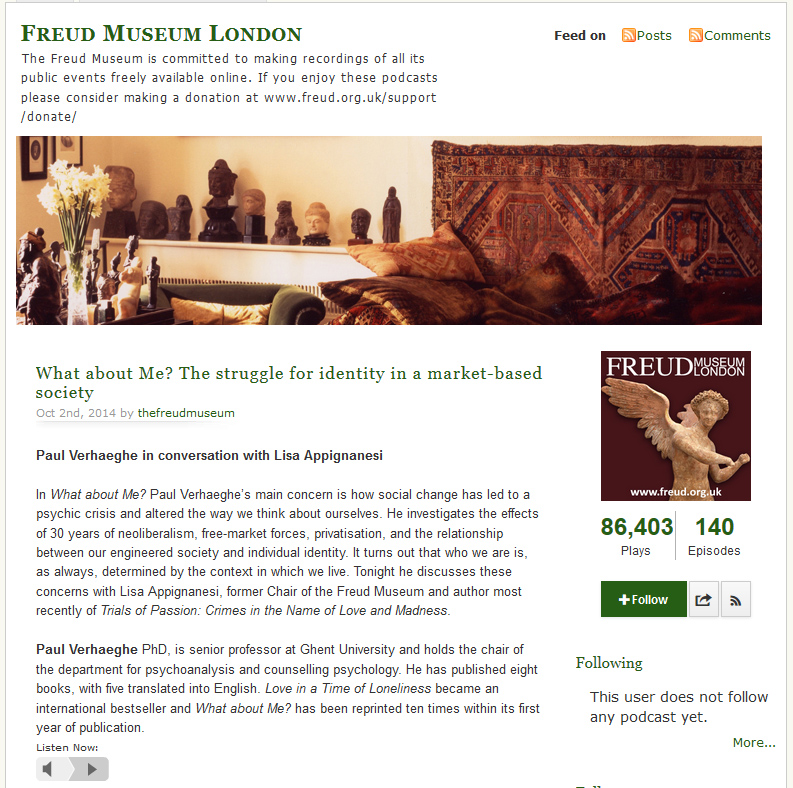
Anouchka Grose: The Unconscious from Freud to Lacan
Anouchka Grose

[Click here to visit the Freud Museum Site and hear the Podcast]

While the contents of the unconscious might be obscure and perplexing, when Freud spoke about ‘the unconscious’ he meant something very precise. This talk will look at Freud’s ‘discovery’ of the unconscious, and at his conceptualisation of it. It will also deal with the peculiar logic of symptom formation. From there, it will go on to look at Lacan’s notion of the language-like unconscious, showing how this was developed in accordance with Freud’s ideas.

Anouchka Grose is a psychoanalyst and writer practising in London. She is a member of the Centre for Freudian Analysis and Research, where she regularly lectures. She is the author of No More Silly Love Songs: a realist’s guide to romance (Portobello, 2010) and Are you Considering Therapy (Karnac, 2011), and is the editor of ‘Hysteria Today’, a collection of essays to be published by Karnac later this year. She also writes for The Guardian and teaches at Camberwell School of Art.
, , , ,
Artistic process, Culture, Freud, mental health, Poetry, psychoanalysis, psychotherapy, talking treatment

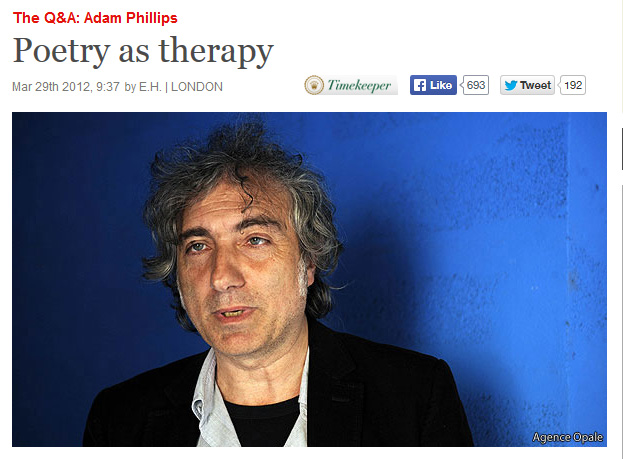
Psychoanalyst Adam Phillips: Poetry as Therapy

Adam Phillips PoetryAdam Phillips: “On the one hand, psychoanalysis is practical in the sense that there is an attempt to solve a problem, or to cure somebody, or at least to address their suffering. But the other thing that psychoanalysis does is that the project is to enable somebody to speak. It’s the attempt to create the conditions in which somebody can speak themselves as fully as possible.”

[Click here to read the whole article on The Economist site]

, , , , , ,
Culture, Freud, mental health, psychoanalysis, talking treatment

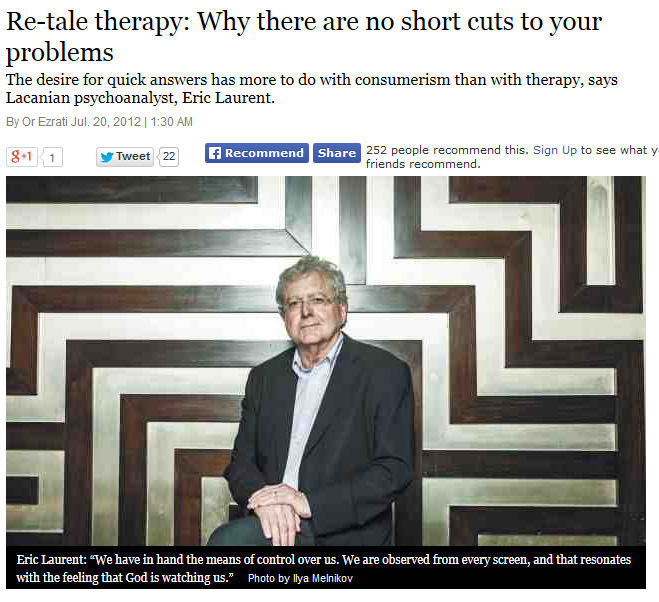
Interview with Psychoanalyst Eric Laurent

laurentClick here to read the whole of the article on the Haaretz website.

Q: What actually gets lost when someone takes his symptoms to a cognitive psychologist?

Laurent: “I can tell you where I do not agree with my colleagues from the ethical viewpoint. I am opposed to the behavioral aspect that exists in the usual combination of cognitive-behavioral therapy. The patient is liable to find himself in a confrontation with a powerful authority who tries to impose a behavioral change with a ‘one size fits all’ approach. As though good behavior exists that can be standardized. That is not only harmful to the subject, it is genuinely dangerous to the ideals of freedom. In 1971, at the height of the behaviorist ‘craze,’ Skinner [B.F. Skinner, the father of behaviorism] told Time magazine that freedom is a luxury we can’t afford.

, , , ,
Courtil, Culture, mental health, psychoanalysis, psychotherapy, talking treatment

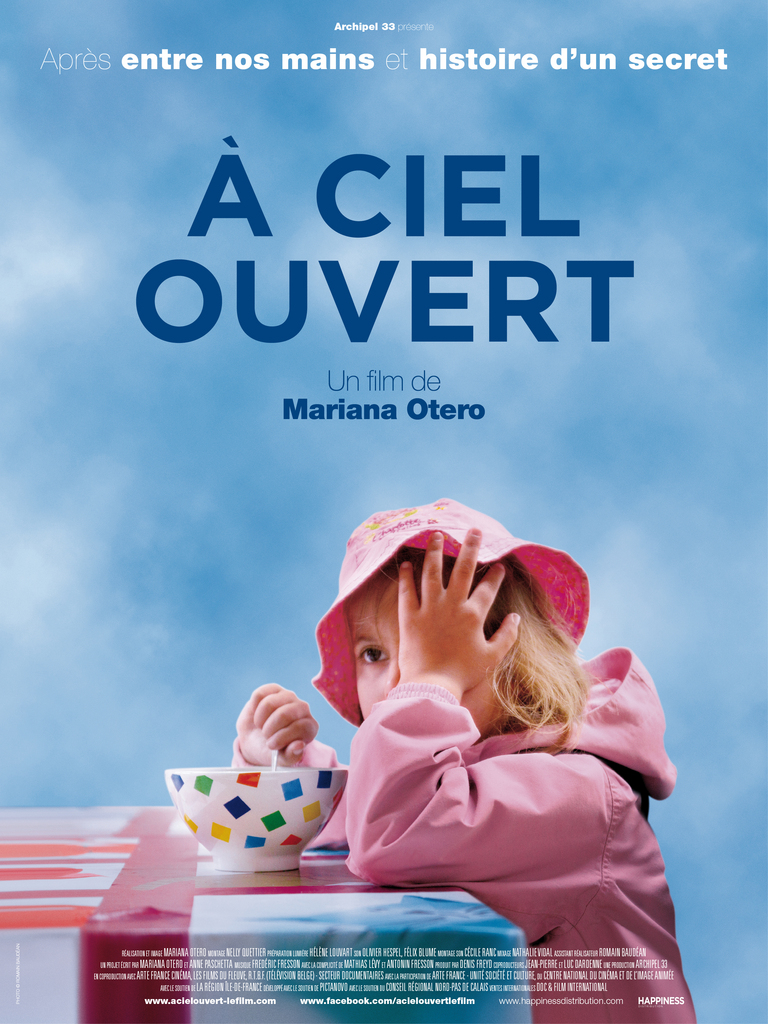
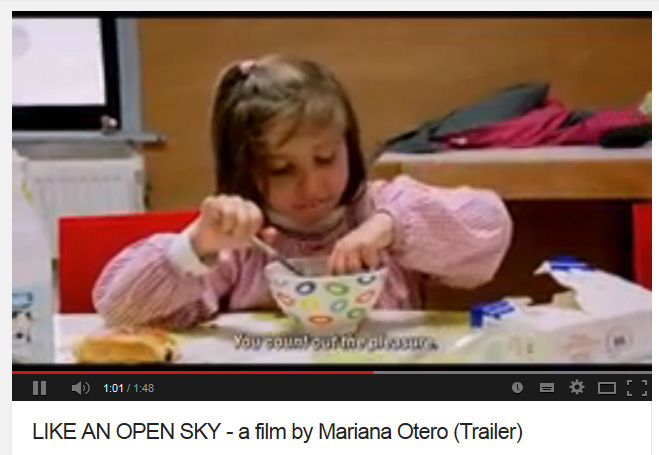
‘Like An Open Sky’ – a documentary about the ‘Courtil’ treatment centre for children

It’s very good to hear that Mariana Otero’s acclaimed film about Le Courtil, the Lacanian-oriented treatment centre on the French-Belgium border for children, adolescents and adults with mental health problems, will be released with subtitles in the UK in October. We’ll try to see about getting a showing in Bristol somehow…

like-an-open-sky

“Alysson considers her body with mistrust. Evanne spins and twists until he collapses. Amina can’t manage to make words come out of her mouth. At the border between France and Belgium there exists a special place which takes care of psychologically and socially challenged children. Day after day, the adults working there try to understand the enigma that each of these children represent and invent, case by case, without ever imposing anything, solutions that will help them live peaceful lives.”

Click the image below to watch the trailer for the film on YouTube: open sky

, , , , , , ,
Culture, mental health, Open Dialogue, psychotherapy, talking treatment

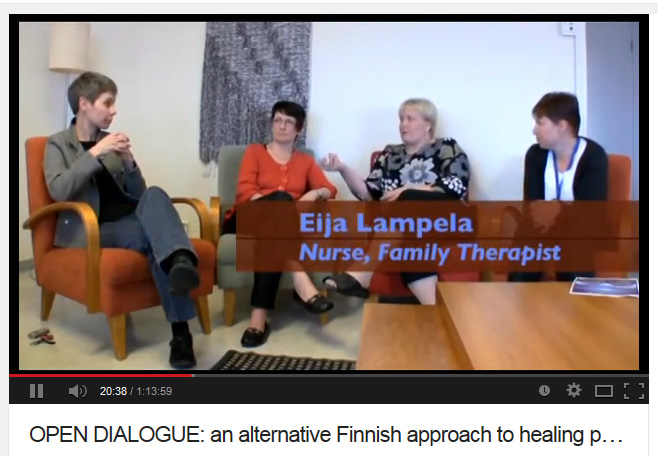
The Open Dialogue Approach to Healing Psychosis

open dialogueClick the image above to watch the full 74 minute documentary on the Open Dialogue Approach, an innovative treatment for psychosis which has been pioneered recently in Finland.

, , , , ,
Culture, DSM, mental health, Open Dialogue, psychotherapy, talking treatment

Carina Håkansson – Healing Psychosis with the Open Dialogue Approach

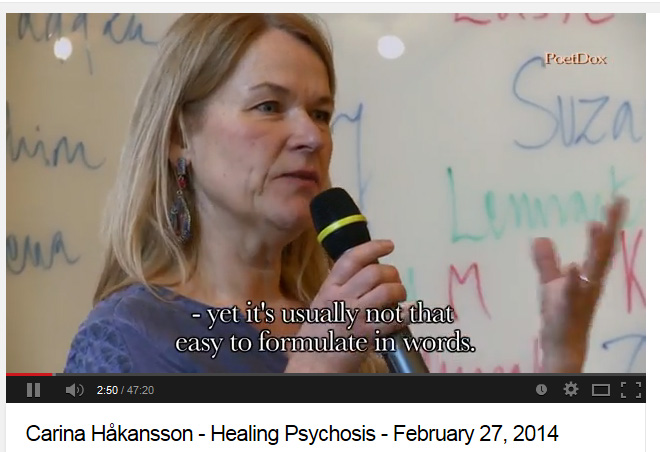
healing psychosis

Carina Hakansson speaks about the groundbreaking ‘Open Dialogue Approach’ to the in-patient treatment of psychosis in Sweden. [Click here to view the talk on YouTube]

, , , , ,
Artistic process, Culture, mental health, psychotherapy

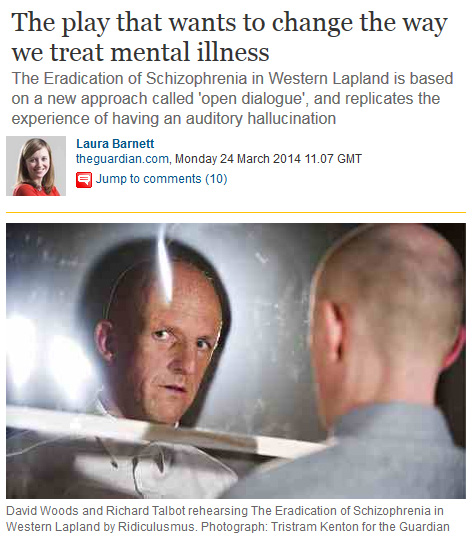
The play that wants to change the way we treat mental illness

lapland schitzophreniaCan theatre offer a cure for psychosis? It’s unlikely – and it would be unwise for any theatre-maker even to try. What theatre can do, though, is convey the experience of psychosis: the hallucinations and delusions – often terrifying, sometimes comical – that define reality for those with schizophrenia and related conditions. [Click here to read the rest of the article on the Guardian site.]

, , , , ,
Culture, mental health, psychoanalysis, psychotherapy

The enduring legacy of Freud – Anna Freud

Anna Freud [Read the whole article on the BBC website]

The legacy of Sigmund Freud – the founder of psychoanalysis is well known. But perhaps less so is the impact his daughter Anna had, and continues to have, on child psychoanalysis. Anna, the youngest of Freud’s six children, was the only one to follow in her father’s footsteps. Her involvement began at the age of just 13, when she took part in her father’s weekly discussions on psychoanalytic ideas. Controversially, she is also believed to have received some informal therapy from her father. By the time of her death in 1982, Anna Freud’s work had revolutionised how we treat children in many walks of life, such as in hospital – with longer visiting hours when children are having treatment – and in the judicial system, where screens and video cameras are used when children have to give evidence. […]

, , ,
DSM, mental health, psychoanalysis, psychotherapy

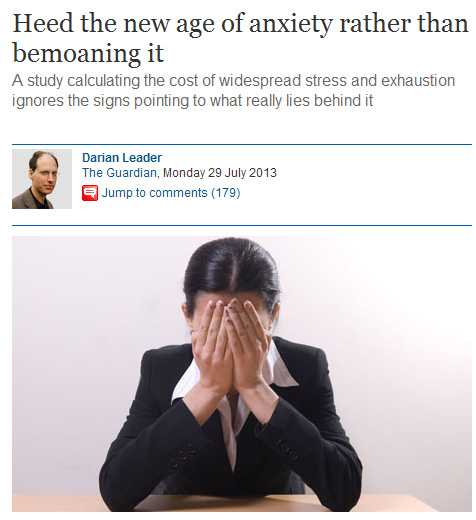
Darian Leader: “Heed the new age of anxiety rather than bemoaning it”

Lacanain Psychoanalyst Darian Leader on Anxiety


[Click here to read the whole article on the Guardian Website]

If the postwar age of anxiety was supposed to have ended 30 or 40 years ago, a swath of media articles now suggest a dramatic comeback. A new and widely reported study claims a massive increase in anxiety disorders in the UK, with an estimated 8.2 million sufferers compared to 2.3 million in 2007. The pressures of modern life, we are told, must play a large part here, with job stress aggravating the difficulties of urban populations.

The focus on socio-economic conditions is surely a good thing. In the 1980s, Thatcherism encouraged a redrafting of work-related problems as psychological ones. As each person became a unit of economic competition, it wasn’t the market’s fault if they didn’t get a job but their own. Injustice in the marketplace was glossed over as individual failure.

Hundreds of books and articles have questioned this without gaining media exposure, so why the visibility of the new research? I was puzzled to find not a single sentence in the report linking the supposed increase in anxiety to social causes. In fact, there was no explanation at all, and the headline-grabbing prevalence rate for the UK was estimated from Iceland, Norway and Switzerland.

Here, we find a perfect expression of the new mental hygiene movement. Anxiety is grouped together with dementia, stroke and neuromuscular conditions as a “brain disorder”, and the authors urge an approach that uses “comparable methodologies for both mental and neurological illness”. Disorders are listed in terms of their cost to the economy rather than to individual lives, families and communities. […]

, , , , ,
Scroll to Top