Darian Leader on Psychosis introduced by Ajay Khandelwal
Introduced by Ajay Khandelwal, psychoanalyst Darian Leader gives the Lambeth and Southwark MIND Psychotherapy Clinic 2016 Annual Lecture – On Psychosis.
[Click here to visit the Guardian site and read Oliver Burkeman’s article.]
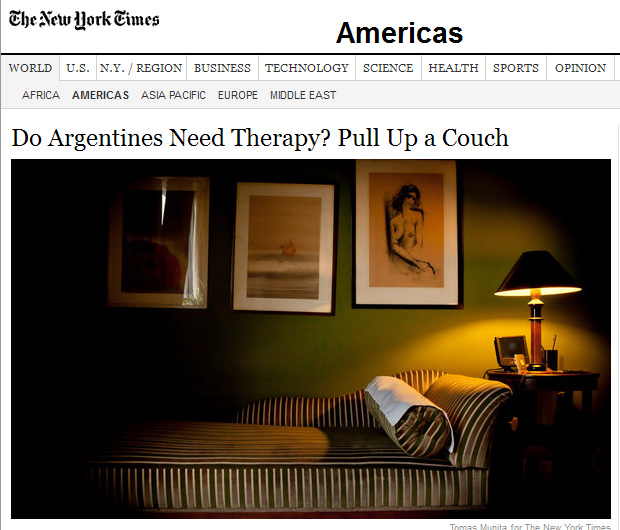
Cheap and effective, CBT became the dominant form of therapy, consigning Freud to psychology’s dingy basement. But new studies have cast doubt on its supremacy – and shown dramatic results for psychoanalysis. Is it time to get back on the couch?
“…researchers at London’s Tavistock clinic published results in October from the first rigorous NHS study of long-term psychoanalysis as a treatment for chronic depression. For the most severely depressed, it concluded, 18 months of analysis worked far better – and with much longer-lasting effects – than “treatment as usual” on the NHS, which included some CBT. Two years after the various treatments ended, 44% of analysis patients no longer met the criteria for major depression, compared to one-tenth of the others.”
IN THIS EPISODE:
A fractured self
The ego, the id and the superego
Why did Freud develop a new model?
Devils and angels
People fall ill of their moral ideals
A horse and a rider
The ego is like a politician
The goal of analysis is to stop the ego being so silly
More info: www.freud.org.uk/education/
[Click here to view the Freud Museum video on YouTube]
Series trailer for Freud Museum introductory videos on psychoanalysis featuring interviews with analysts including John Forrester, Anne Worthington, Dany Nobus, Darian Leader, Astrid Gessert, Daniel Pick and Anouchka Grose.
[Click here to visit the Freud Museum Site and hear the Podcast]
While the contents of the unconscious might be obscure and perplexing, when Freud spoke about ‘the unconscious’ he meant something very precise. This talk will look at Freud’s ‘discovery’ of the unconscious, and at his conceptualisation of it. It will also deal with the peculiar logic of symptom formation. From there, it will go on to look at Lacan’s notion of the language-like unconscious, showing how this was developed in accordance with Freud’s ideas.
Anouchka Grose is a psychoanalyst and writer practising in London. She is a member of the Centre for Freudian Analysis and Research, where she regularly lectures. She is the author of No More Silly Love Songs: a realist’s guide to romance (Portobello, 2010) and Are you Considering Therapy (Karnac, 2011), and is the editor of ‘Hysteria Today’, a collection of essays to be published by Karnac later this year. She also writes for The Guardian and teaches at Camberwell School of Art.
Adam Phillips: “On the one hand, psychoanalysis is practical in the sense that there is an attempt to solve a problem, or to cure somebody, or at least to address their suffering. But the other thing that psychoanalysis does is that the project is to enable somebody to speak. It’s the attempt to create the conditions in which somebody can speak themselves as fully as possible.”
[Click here to read the whole article on The Economist site]
Click here to read the whole of the article on the Haaretz website.
Q: What actually gets lost when someone takes his symptoms to a cognitive psychologist?
Laurent: “I can tell you where I do not agree with my colleagues from the ethical viewpoint. I am opposed to the behavioral aspect that exists in the usual combination of cognitive-behavioral therapy. The patient is liable to find himself in a confrontation with a powerful authority who tries to impose a behavioral change with a ‘one size fits all’ approach. As though good behavior exists that can be standardized. That is not only harmful to the subject, it is genuinely dangerous to the ideals of freedom. In 1971, at the height of the behaviorist ‘craze,’ Skinner [B.F. Skinner, the father of behaviorism] told Time magazine that freedom is a luxury we can’t afford.
It’s very good to hear that Mariana Otero’s acclaimed film about Le Courtil, the Lacanian-oriented treatment centre on the French-Belgium border for children, adolescents and adults with mental health problems, will be released with subtitles in the UK in October. We’ll try to see about getting a showing in Bristol somehow…
“Alysson considers her body with mistrust. Evanne spins and twists until he collapses. Amina can’t manage to make words come out of her mouth. At the border between France and Belgium there exists a special place which takes care of psychologically and socially challenged children. Day after day, the adults working there try to understand the enigma that each of these children represent and invent, case by case, without ever imposing anything, solutions that will help them live peaceful lives.”
Click the image below to watch the trailer for the film on YouTube: 
Click the image above to watch the full 74 minute documentary on the Open Dialogue Approach, an innovative treatment for psychosis which has been pioneered recently in Finland.